Info@test.visgl.com











Inspection News
Solar Panel Inspection in Vietnam: How Smart Buyers Reduce Long-Term Energy Loss Before Shipment
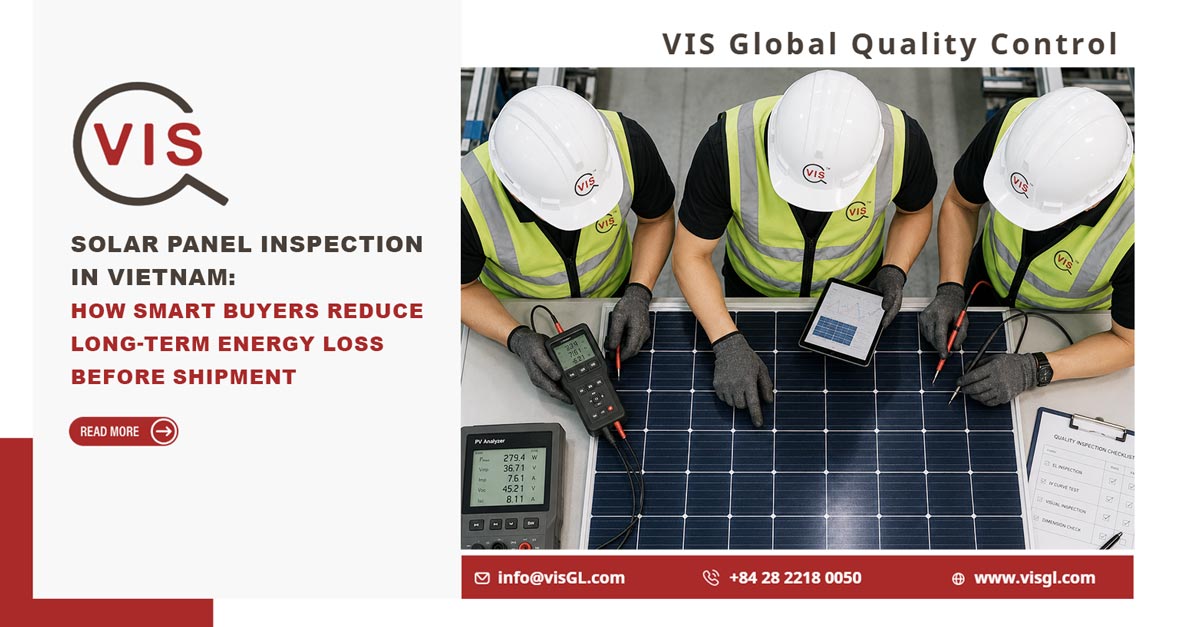
Solar Panel Inspection in Vietnam: How Smart Buyers Reduce Long-Term Energy Loss Before Shipment
The global photovoltaic industry is scaling at unprecedented speed. Yet behind the expansion of renewable energy manufacturing lies a growing issue that many importers underestimate: inconsistent solar panel quality control.
For EPC contractors, renewable energy investors, distributors, and sourcing managers, one defective shipment does not simply create a replacement cost. It can trigger delayed project commissioning, warranty disputes, lower energy yield performance, and long-term reputational damage.
This is why professional solar panel inspection in Vietnam is rapidly becoming a critical layer of supply chain risk management rather than a simple compliance procedure.
Today’s leading buyers no longer rely solely on supplier certificates. They integrate structured inspection programs including factory audit in Vietnam, pre-production inspection in Vietnam, during production inspection in Vietnam, pre-shipment inspection service in Vietnam, loading supervision in Vietnam, and full inspection in Vietnam to secure product consistency before modules leave the factory.
As Vietnam continues strengthening its position as a strategic manufacturing hub for renewable energy products, independent quality verification has become essential for companies sourcing solar panels at scale.
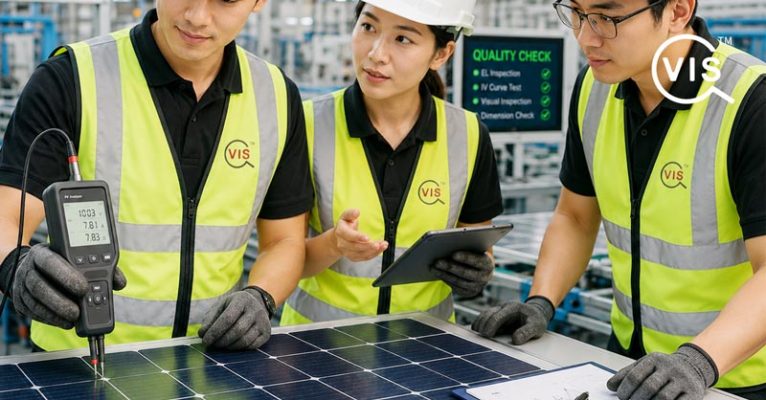
Why Solar Panel Quality Failures Are More Expensive Than Most Buyers Expect
Unlike consumer products, solar panels are expected to operate continuously for over 25 years. A hidden manufacturing defect may remain undetected during installation yet slowly reduce energy output year after year.
This is where many procurement teams make a costly mistake.
They focus heavily on unit pricing while underestimating lifecycle quality risk.
In practical field conditions, inspectors frequently identify defects such as:
- Microcracks invisible to the naked eye
- Weak soldering points
- Inconsistent lamination pressure
- EVA encapsulation bubbles
- Junction box bonding failures
- Frame grounding inconsistencies
- Flash test data deviation
According to research from the National Renewable Energy Laboratory, microcracks remain one of the leading contributors to photovoltaic performance degradation over time.
NREL PV Reliability Research
This is exactly why experienced importers now integrate multiple inspection stages into their sourcing strategy instead of depending on a single final inspection.
A structured combination of factory audit in Vietnam, pre-production inspection in Vietnam, during production inspection in Vietnam, and pre-shipment inspection service in Vietnam significantly reduces downstream operational risk.
Why Vietnam Has Become a Major Hub for Solar Panel Manufacturing
Vietnam’s renewable energy manufacturing sector has expanded aggressively due to competitive labor capability, export flexibility, and supply chain diversification away from overconcentrated sourcing markets.
For international buyers, this creates both opportunity and complexity.
The opportunity is scalable production.
The complexity is supplier consistency.
Not all manufacturers operate with the same level of process control maturity. Some factories maintain excellent production discipline during audits yet struggle under peak seasonal production pressure.
This is where professional factory audit in Vietnam becomes strategically important.
A comprehensive audit evaluates far more than certifications. Experienced inspectors assess:
Production Capability Stability
Can the factory realistically meet production volume without subcontracting or compromising process quality?
Quality Management Systems
Are corrective action systems functioning properly? Are inspection records traceable and consistently maintained?
Equipment Calibration Control
Are EL testers, flash testers, and measurement tools calibrated according to international standards?
Workforce Process Discipline
Are operators following standardized handling procedures for fragile solar cells?
These operational details often reveal more about long-term reliability than brochures or marketing presentations.
The Real Value of During Production Inspection in Vietnam
One of the biggest misconceptions in the industry is believing that quality inspection should happen only before shipment.
In reality, the most effective intervention point is during manufacturing itself.
Professional during production inspection in Vietnam allows inspectors to identify instability before full-scale production is completed.
This matters enormously in photovoltaic manufacturing because defects multiply rapidly once mass production accelerates.
During one recent solar panel inspection project in Vietnam, inspectors identified abnormal lamination consistency during a during production inspection in Vietnam assignment. EL testing revealed stress-related cell damage patterns affecting nearly 5% of sampled modules.
Production was temporarily halted.
The manufacturer adjusted lamination pressure parameters and retrained handling operators before the next production batch resumed.
Without intervention, thousands of defective modules could have entered the export supply chain undetected.
This is why experienced buyers increasingly treat during production inspection in Vietnam as a preventive investment rather than a corrective expense.
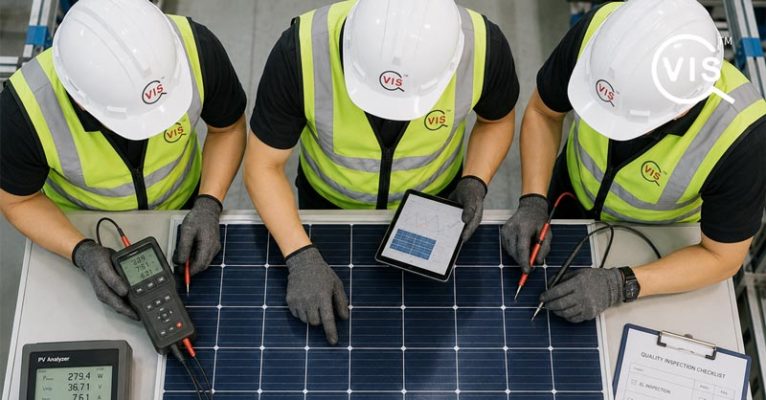
Case Study — Preventing a Six-Figure Warranty Risk Before Shipment
In early 2025, an overseas EPC contractor sourcing monocrystalline solar panels from Vietnam implemented a layered inspection protocol including:
- Factory audit in Vietnam
- Pre-production inspection in Vietnam
- During production inspection in Vietnam
- Pre-shipment inspection service in Vietnam
- Loading supervision in Vietnam
The order involved 28 export containers destined for a utility-scale project.
During EL testing conducted under the pre-shipment inspection service in Vietnam, inspectors identified microcrack indicators in approximately 6.4% of sampled panels.
Further investigation traced the issue back to excessive manual handling pressure during string interconnection processes.
Corrective action was immediately implemented.
The supplier replaced affected modules before shipment approval.
Estimated outcomes included:
- Prevention of approximately USD 470,000 in future replacement exposure
- Reduction of projected field failure risk from 7% to below 1.8%
- Elimination of potential installation delays
- Improved packaging stability verified through loading supervision in Vietnam
This case reinforced a reality many procurement managers already understand:
The cost of professional inspection is insignificant compared with the financial impact of undetected field failures.
Why Loading Supervision in Vietnam Is Often Overlooked
Even high-quality solar panels can become compromised during logistics handling.
Solar modules remain vulnerable to:
- Pallet compression
- Moisture exposure
- Container movement vibration
- Incorrect stacking angles
- Packaging collapse during sea transport
Professional loading supervision in Vietnam helps ensure that shipment integrity is preserved after production approval.
Inspectors verify carton conditions, pallet stability, loading sequence, container cleanliness, moisture prevention measures, and quantity accuracy before sealing.
For utility-scale projects, this stage is increasingly considered mandatory rather than optional.
Full Inspection in Vietnam vs Standard Sampling Inspection
Standard AQL sampling may not always provide sufficient confidence for high-value renewable energy projects.
This is why many importers now request full inspection in Vietnam for:
- First-time suppliers
- Private-label production
- Utility-scale EPC procurement
- High-risk sourcing regions
- Tight technical specifications
A professional full inspection in Vietnam goes beyond random sampling and focuses on deeper consistency verification across larger production volumes.
This becomes particularly important when buyers require stronger traceability assurance or stricter bankability expectations.
According to the International Electrotechnical Commission, photovoltaic module quality standards continue evolving as manufacturing technologies advance.
IEC Solar Energy Standards
As standards become stricter, buyers relying solely on supplier declarations face increasing risk exposure.
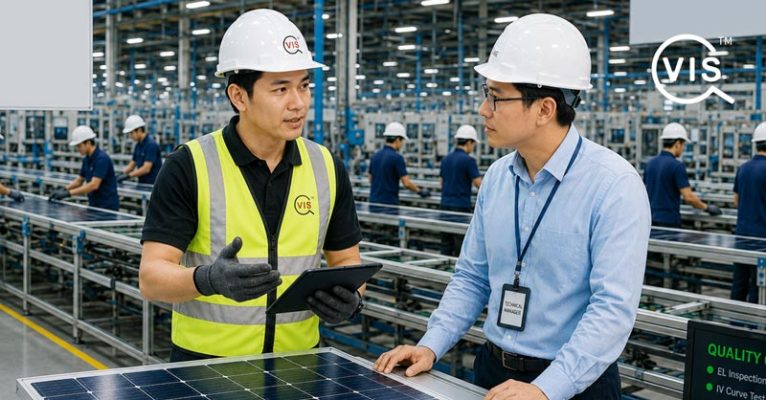
What Smart Procurement Teams Now Expect From Solar Panel Inspection in Vietnam
The inspection industry itself is changing.
Global buyers no longer want generic pass/fail reports.
They expect actionable manufacturing intelligence.
Modern inspection programs increasingly include:
EL Defect Pattern Analysis
Used to identify hidden cell damage invisible during visual inspection.
Traceability Verification
Ensures module serial numbers align with production records and flash test data.
Packaging Engineering Review
Evaluates transport durability and container compression resistance.
Production Process Monitoring
Detects operational inconsistency before large-scale defects emerge.
This is where professional inspection providers create strategic value beyond simple quality control execution.
At Vis Global Quality Control, solar panel inspection programs increasingly focus on risk prevention, supplier transparency, and production consistency across global sourcing operations.
FAQ — Solar Panel Inspection in Vietnam
What is the best time to perform solar panel inspection in Vietnam?
The most effective timing is during production because corrective action remains possible before full manufacturing completion.
Why is factory audit in Vietnam important before placing orders?
A professional factory audit in Vietnam helps verify manufacturing capability, quality systems, production capacity, and operational reliability before financial commitment.
What defects are commonly found during pre-shipment inspection service in Vietnam?
Typical issues include microcracks, weak junction box adhesion, frame scratches, flash test inconsistency, barcode mismatch, and packaging instability.
Why do EPC companies request loading supervision in Vietnam?
Because shipping damage can significantly affect module reliability during long-distance transport. Proper loading reduces transit-related risk.
When should buyers choose full inspection in Vietnam?
Full inspection is highly recommended for first-time suppliers, private-label orders, utility-scale procurement, and technically sensitive projects.
Conclusion — Solar Panel Inspection Is Now Part of Long-Term Energy Performance
The renewable energy market is no longer driven only by manufacturing scale or low pricing.
It is increasingly driven by reliability, traceability, and performance confidence.
For serious global buyers, professional inspection programs combining factory audit in Vietnam, pre-production inspection in Vietnam, during production inspection in Vietnam, pre-shipment inspection service in Vietnam, loading supervision in Vietnam, and full inspection in Vietnam have become essential risk-control infrastructure.
The companies achieving lower warranty exposure and stronger project stability are not necessarily the companies buying the cheapest modules.
They are the companies identifying risk before shipment departure.
Explore advanced solar panel inspection solutions and download a professional sample inspection report from:
Vis Global Quality Control – Solar Panel Inspection Guide
For EPC firms, renewable energy importers, and procurement teams sourcing from Vietnam, independent inspection is no longer a secondary operational task.
It is part of protecting long-term energy yield, investor confidence, and global project performance.