Inspection Service for Printing and Packaging Industry: The Hidden Quality Risks That Cause Shipment Rejections
Inspection Service for Printing and Packaging Industry: Preventing Costly Defects Before Shipment
The global printing and packaging industry is under growing pressure from brand owners, retailers, and international regulators. Packaging today is no longer just a protective layer — it directly impacts brand reputation, product safety, compliance, sustainability goals, and customer experience.
According to the ISO Official Website, packaging-related non-conformities remain one of the leading causes of shipment delays and product recalls in consumer goods supply chains. Meanwhile, research from PMMI Association shows that more than 72% of consumers say packaging design and print quality influence purchasing decisions.
For importers, retailers, and manufacturers, this creates a critical challenge:
- How can printing consistency be maintained across mass production?
- How do buyers ensure packaging complies with international standards?
- What happens when labeling errors trigger customs rejection?
- How can suppliers reduce carton failure during logistics handling?
This is where a professional inspection service for printing and packaging industry becomes essential.
Unlike generic quality checks, packaging inspection requires specialized expertise in:
- Print registration accuracy
- Color consistency
- Barcode readability
- Carton compression performance
- Adhesion and lamination integrity
- Labeling compliance
- Packaging durability during transportation
This article explores the real operational risks in packaging production, inspection methodologies, AQL standards, ISO references, defect classifications, and a real-world case study with measurable data.

Why Printing & Packaging Inspection Matters More Than Ever
Packaging defects create downstream problems far beyond aesthetics.
A single labeling mistake can lead to:
- Customs detention
- Retail rejection
- Product recalls
- Consumer safety risks
- Brand reputation damage
In highly regulated industries such as food, cosmetics, pharmaceuticals, electronics, and toys, packaging non-compliance may violate:
- FDA requirements
- EU packaging directives
- Amazon FBA standards
- Retailer packaging specifications
- Sustainability regulations
According to U.S. Food & Drug Administration (FDA), labeling and packaging errors account for a significant portion of product recalls globally.
Common Customer Pain Points in Packaging Production
1. Color Variation Between Production Batches
Different ink density or calibration creates inconsistent branding.
2. Barcode Scanning Failure
Improper print contrast causes warehouse and retail scanning problems.
3. Weak Carton Compression
Packaging collapses during shipping or pallet stacking.
4. Incorrect Label Information
Wrong language, country of origin, or regulatory icons trigger customs issues.
5. Lamination Peeling
Poor adhesive bonding reduces product presentation quality.
6. Die-Cut Misalignment
Packaging dimensions become inconsistent during assembly.
Without professional inspection, these issues often remain undetected until goods arrive at destination warehouses.
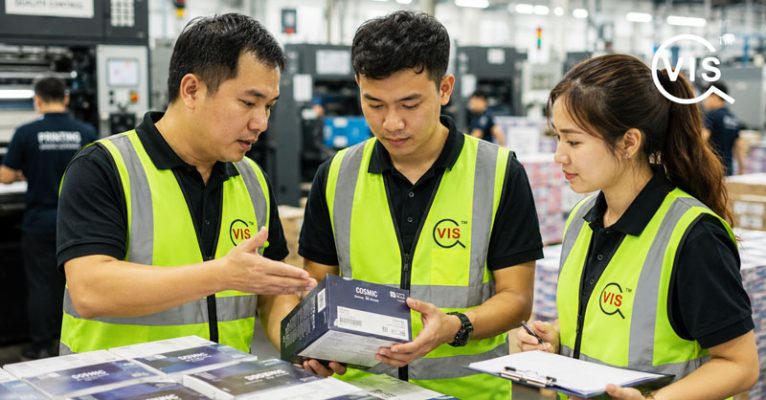
What Does an Inspection Service for Printing and Packaging Industry Cover?
Professional packaging inspection is usually conducted during:
- Pre-production stage
- During production inspection (DUPRO)
- Final random inspection (FRI)
- Container loading supervision
Core Inspection Areas
Visual Printing Inspection
Inspectors verify:
- Color accuracy
- Ink smearing
- Ghosting
- Print clarity
- Registration alignment
- Font readability
Structural Packaging Inspection
Packaging integrity tests include:
- Carton compression strength
- Drop testing
- Edge crush test (ECT)
- Seal strength
- Folding endurance
Barcode Verification
Using barcode scanners to validate:
- EAN
- UPC
- QR codes
- Data Matrix readability
Label Compliance Inspection
Verification of:
- SKU accuracy
- Country of origin
- Safety symbols
- Recycling marks
- Regulatory information
Packaging Material Verification
Inspection checks:
- GSM paper thickness
- Corrugated flute quality
- Lamination adhesion
- Moisture resistance
AQL Standards Used in Packaging Inspection
Most professional inspection companies apply the internationally recognized AQL standard.
What is AQL?
Acceptable Quality Limit (AQL) is a statistical sampling method defined under:
- ANSI/ASQ Z1.4
- ISO 2859-1
Reference:
American Society for Quality (ASQ)
Recommended AQL Levels for Printing & Packaging
| Defect Type | Recommended AQL |
|---|---|
| Critical Defects | 0 |
| Major Defects | 2.5 |
| Minor Defects | 4.0 |
Packaging Defect Classification
Critical Defects
- Wrong barcode
- Missing legal warning
- Toxic ink contamination
- Incorrect product information
Major Defects
- Severe color mismatch
- Structural carton weakness
- Incorrect dimensions
- Lamination peeling
Minor Defects
- Small scratches
- Minor glue excess
- Slight print deviation
ISO Standards Relevant to Packaging Inspection
Professional inspectors commonly reference multiple ISO standards.
Key ISO Standards
ISO 9001 – Quality Management Systems
Helps manufacturers maintain process consistency.
ISO 18601 – Packaging and Environment
Focuses on sustainable packaging requirements.
ISO 12647 – Process Control for Printing
Defines color reproduction and print quality control.
ISO 780 – Packaging Handling Symbols
Standardizes transportation markings.
Reference:
ISO Packaging Standards
Packaging Inspection Checklist Used by Professional Inspectors
Visual Inspection Checklist
- Print registration aligned
- No ink smudging
- Correct Pantone colors
- No missing text
- No scratches or stains
- Barcode readable
Structural Inspection Checklist
- Carton dimensions accurate
- Glue adhesion acceptable
- Carton compression passed
- Packaging fold integrity confirmed
- Seal strength verified
Compliance Inspection Checklist
- Correct product labeling
- Country of origin accurate
- Regulatory icons present
- Retailer packaging requirements met
Packaging Drop Test Checklist
- No carton rupture
- Internal products protected
- Seal remains intact
- No excessive deformation
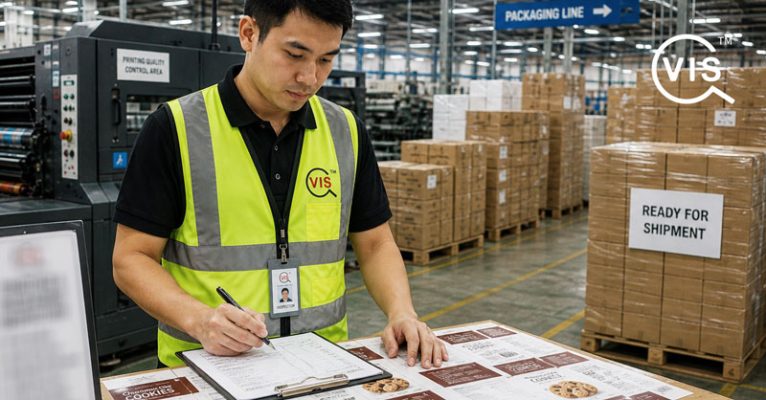
Real Case Study — How Packaging Inspection Prevented a $180,000 Shipment Loss
A European cosmetics importer sourced printed folding cartons from Southeast Asia for a seasonal retail launch.
Initial Situation
Production quantity:
- 420,000 printed cartons
Shipment destination:
- Germany and France
Inspection stage:
- Final Random Inspection before shipment
Problems Found During Inspection
Inspectors identified:
- 11% barcode scanning failure rate
- Incorrect recycling symbol on French packaging
- Carton compression weakness below specification
- Significant color inconsistency between production lots
Measured Testing Results
| Inspection Item | Required Standard | Actual Result |
|---|---|---|
| Barcode readability | ≥ 98% pass | 89% pass |
| Carton compression | 32 ECT | 26 ECT |
| Color Delta E tolerance | ≤ 3 | 6.2 |
| Label compliance | 100% | Failed |
Corrective Actions
The supplier implemented:
- Recalibration of printing plates
- Ink density adjustment
- Corrugated material upgrade
- Reprinting of incorrect labels
Final Business Impact
After re-inspection:
- Barcode pass rate improved to 99.7%
- Carton failure reduced by 84%
- Shipment approved without customs issue
- Estimated savings: USD 180,000
This case highlights why packaging inspection should never be treated as a “final step.” It is a risk management tool protecting the entire supply chain.
The Growing Importance of Sustainable Packaging Compliance
Sustainability is rapidly becoming part of packaging quality control.
Global buyers increasingly require:
- Recyclable materials
- FSC-certified paper
- Reduced plastic usage
- Eco-friendly inks
- Packaging waste reduction
According to United Nations Environment Programme, packaging waste regulations are tightening across Europe and North America.
Inspectors now verify:
- Sustainability claims
- Eco-label authenticity
- Material composition
- Recycling compatibility
Why Final Random Inspection Alone Is No Longer Enough
Many suppliers still rely only on final inspection before shipment.
This approach is risky because:
- Defects may already affect large production volumes
- Rework costs become extremely high
- Shipment schedules are delayed
Modern buyers increasingly adopt:
- During Production Inspection (DUPRO)
- Inline process monitoring
- Packaging performance testing
- Supplier process audits
The earlier defects are detected, the lower the total quality cost.
Best Practices to Reduce Packaging Defects
Standardize Color Approval
Use approved Pantone references and master samples.
Implement Inline QC
Inspect products continuously during printing production.
Conduct Transit Simulation Testing
Perform drop tests and compression testing before shipment.
Verify Regulatory Compliance Early
Review labeling requirements before mass printing begins.
Apply Statistical Sampling
Use ISO 2859-based AQL sampling methods consistently.
Conclusion
The printing and packaging industry faces increasing pressure from:
- Retail compliance
- Global regulations
- Sustainability expectations
- Consumer brand perception
A professional inspection service for printing and packaging industry helps manufacturers and importers:
- Reduce defect risks
- Prevent costly recalls
- Improve packaging consistency
- Protect brand reputation
- Ensure regulatory compliance
Packaging quality is no longer just about appearance — it directly affects logistics performance, customs clearance, retailer acceptance, and end-user trust.
For global buyers, quality inspection is not an optional expense. It is a strategic investment in supply chain reliability.
FAQ – Inspection Service for Printing and Packaging Industry
What is packaging inspection?
Packaging inspection is a quality control process that evaluates printed materials, carton strength, labeling accuracy, barcode readability, and compliance with buyer specifications before shipment.
Why is barcode inspection important?
Unreadable barcodes can cause warehouse rejection, retail scanning failure, and shipment delays.
What AQL is commonly used for packaging inspection?
Most buyers use:
- Critical: 0
- Major: 2.5
- Minor: 4.0
Based on ISO 2859-1 and ANSI/ASQ Z1.4 standards.
What ISO standards apply to printing inspection?
Common standards include:
- ISO 9001
- ISO 12647
- ISO 18601
- ISO 780
When should packaging inspection be conducted?
Best practice includes:
- Pre-production inspection
- During production inspection
- Final random inspection
- Loading supervision
Protect Your Packaging Quality Before It Becomes a Supply Chain Problem
Whether you source folding cartons, labels, retail packaging, corrugated boxes, or printed materials, professional inspection helps detect defects before shipment leaves the factory.
Partner with VIS Global Quality Control to:
- Reduce packaging risks
- Improve supplier consistency
- Ensure AQL compliance
- Strengthen global shipment reliability
- Protect your brand reputation in international markets
Request a detailed packaging inspection report sample and discover how global buyers reduce costly quality failures before shipment.
👉 Download the Packaging Inspection Checklist and Sample Inspection Report today.